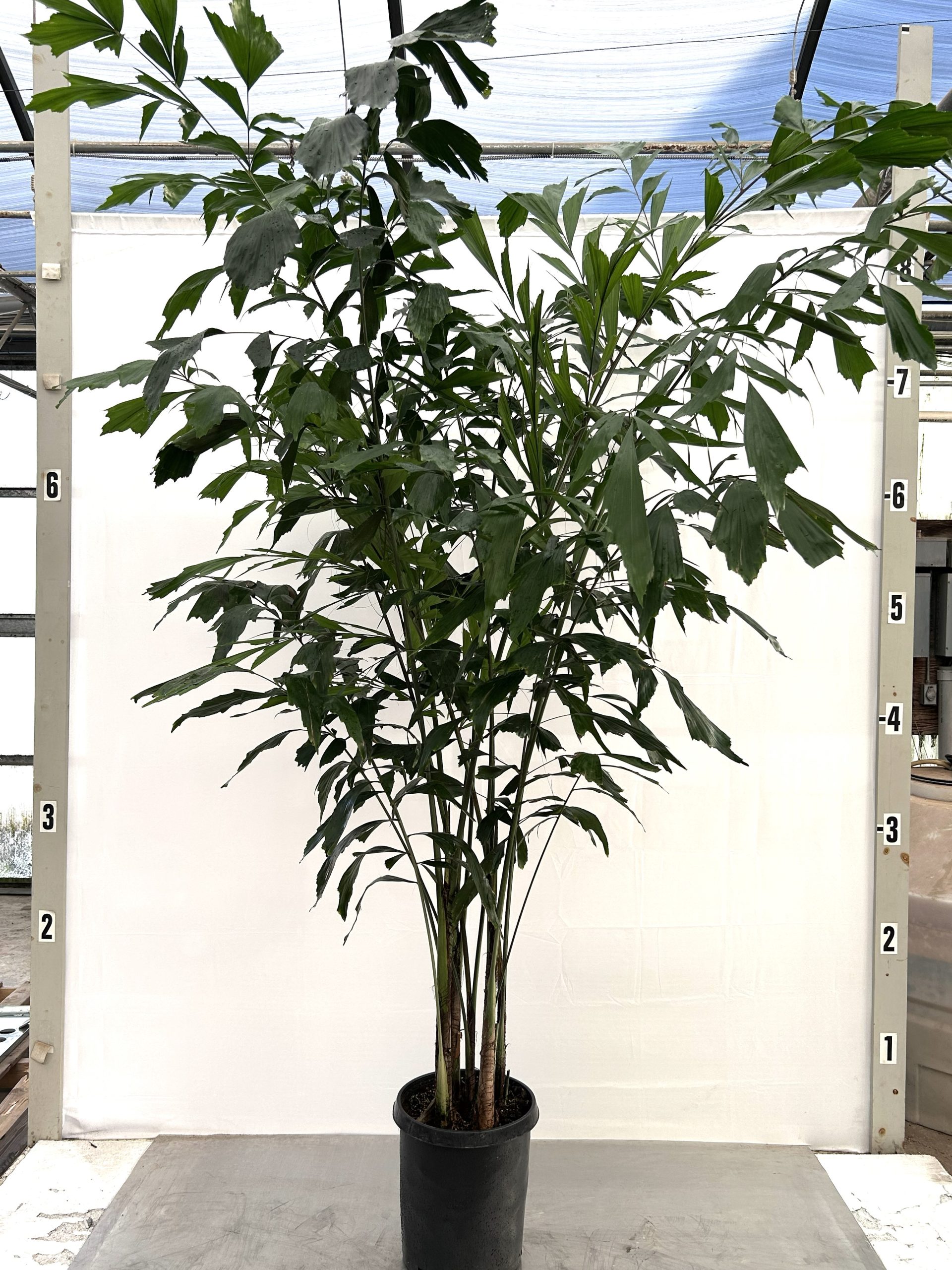
 Caryota (Fishtail Palm): The Bold, Tropical Statement Plant Your Space Has Been Waiting For
If you’re looking to bring big, tropical drama into your home, office, or hospitality space, the Caryota, also known as the Fishtail Palm, deserves a spot at the top of your list. With its sculptural form, jagged fishtail-shaped leaves, and commanding vertical presence, this palm delivers the type of architectural beauty that instantly elevates any interior.
Whether you want a lush focal point, a living room statement plant, or a dramatic feature for commercial interiors, Caryota offers unforgettable texture and tropical energy.
Why Caryota (Fishtail Palm) Makes an Unforgettable Indoor Showpiece
Unmistakable Tropical Architecture
Caryota’s signature jagged, triangular leaflets give it a bold, exotic presence
-
- Younger plants (especially in 5-gallon sizes) have a full, leafy appearance perfect for lush, compact styling.
- Mature Caryotas develop tall, stretching trunks that form a graceful umbrella-like canopy, creating a truly sculptural silhouette.
As they age, Caryotas transition naturally from dense fullness to vertical drama, offering a layered look that only gets better over time.
Impressive Indoor Performance
Despite being a natural canopy palm, Caryota adapts beautifully to indoor environments.
With bright filtered light and consistent moisture, it stays vibrant, green, and textured year-round.
This makes it ideal for:
-
- Homes with open floor plans.
- Office lobbies and collaborative spaces.
- Hotels, resorts, and luxury hospitality venues.
- Designers seeking a tropical interior focal point.
Strong Roots & Multi-Stemmed Growth
Caryota has an incredibly powerful root system—strong enough to break pots if left confined too long.
Pro grower tip: Up-pot early once roots fill the container. In larger decorative planters, Caryota develops multiple stems that create a layered, full, and architectural display.
Light Requirements: Bright, Indirect Light Is Best
For the best indoor performance:
-
- Provide bright, indirect or filtered light.
- Accepts some gentle early-morning or late-afternoon sun.
- Avoid low light—it causes sparse growth and stretching.
A Thirsty Palm That Loves Consistent Moisture
Caryota drinks water quickly and prefers evenly moist soil, but never soggy conditions.
Water thoroughly, let it drain, and irrigate again when the top of the soil becomes dry to the touch.
It thrives in:
-
- Large containers.
- Controlled-watering systems.
- Humid environments.
Year-Round Statement Appeal
A fast-to-moderate grower, Caryota remains lush and emerald green with regular care. Simply remove aging fronds to maintain its elegant, sculptural form.
Styling the Caryota Indoors
Caryota fits beautifully into:
-
- Modern and contemporary interiors.
- Resort-inspired or tropical-themed spaces.
- Large containers as a standalone feature.
- Rainforest-style groupings with low-growing tropical plants.
Its architectural texture makes it a natural focal point—and an excellent living room divider or vertical accent.
Available Sizes
We offer Caryota in:
-
- 3-gallon, 5-gallon, and 7-gallon containers.
- Heights ranging from 3–5 ft juveniles to 8–10 ft indoor specimens.
Indoors, Caryota typically reaches 8–12 ft, eventually forming multi-stemmed clusters for a bold, full profile.
Additional Names: Caryota, Fishtail Palm, Toddy Palm, Wine Palm
Perfect For:
-
- Large residential living rooms
- Open office spaces
- Commercial interiors and lobbies
- Luxury hospitality and resort environments
- Designers seeking height, texture, and tropical drama
Where Caryota Comes From
Native to tropical Asia and the Indo-Pacific, Caryota thrives in:
-
- Humid forest conditions.
- Bright, filtered light.
- Rich, evenly moist soil.
These natural conditions translate well to bright indoor spaces, making Caryota one of the most striking palms for interior landscaping.
Fun Fact:
Caryota grown in Hawaii can be legally shipped into California—Florida-grown Caryota cannot. Our palms begin their journey in Hawaii’s ideal growing climate, ensuring exceptional quality.
Grower’s Tips for a Thriving Caryota
-
- Don’t let it dry out completely. Keep soil evenly moist.
- Reduce watering in cooler months or lower light.
- Brown tips? Often caused by underwatering, low humidity, or mineral sensitivity. Try filtered water and increase humidity.
- Best results: Bright, indirect light + consistent moisture + high humidity.
Best Companion Plants
Pair Caryota with humidity-loving tropicals such as:
-
- Pothos
- Philodendron
- Peace lily
- Dieffenbachia
- Fern varieties
These low-growing plants complement Caryota’s tall, architectural habit for a lush, layered rainforest composition.
Key Characteristics Overview
| Attribute | Profile |
| Light | Medium–High |
| Water | High |
| Pest Resistance | Medium |
| Growth Habit | Large (7 ft+) |
| Popularity | High |
Final Thoughts
If your space needs height, texture, and tropical sophistication, the Caryota Fishtail Palm is one of the most impactful indoor plants you can choose. Its dramatic foliage, architectural form, and lush year-round presence make it an essential centerpiece for homes, offices, and hospitality interiors seeking a bold botanical statement.
For availability or to place an order, contact:
West Coast Nurseries Group, Inc.
sales@westcoastnurseries.com